

Russia Executes First-Ever Triple Arctic LNG Ship-to-Ship Transfer Amid Sanctions
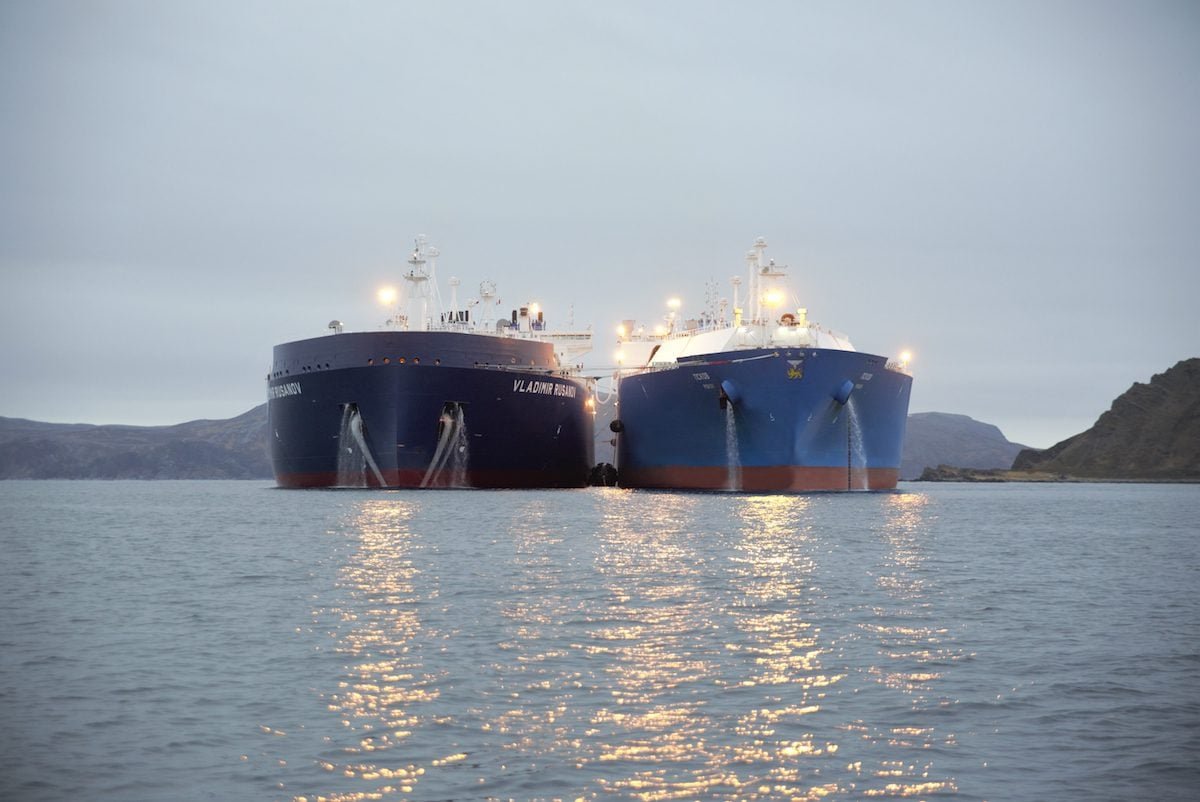
Russia has for the first time conducted three simultaneous LNG ship-to-ship (STS) transfers in Arctic waters, a move highlighting Moscow’s increasingly sophisticated logistics network for exporting gas despite Western sanctions.
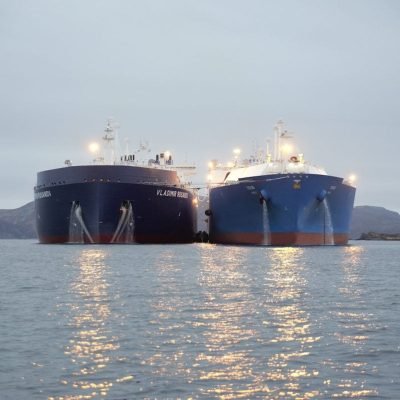
Russia has carried out its first known triple LNG ship-to-ship transfer operation in the Murmansk region, underscoring how Moscow is refining complex maritime logistics to keep Arctic gas flowing even as Western sanctions target its energy exports.
Two of the transfers occurred at the Saam floating storage unit (FSU), where LNG from the sanctioned Arctic LNG 2 project was offloaded and reloaded for onward shipment simultaneously, while a third transfer took place near Kildin Island involving cargo from the unsanctioned Yamal LNG project.
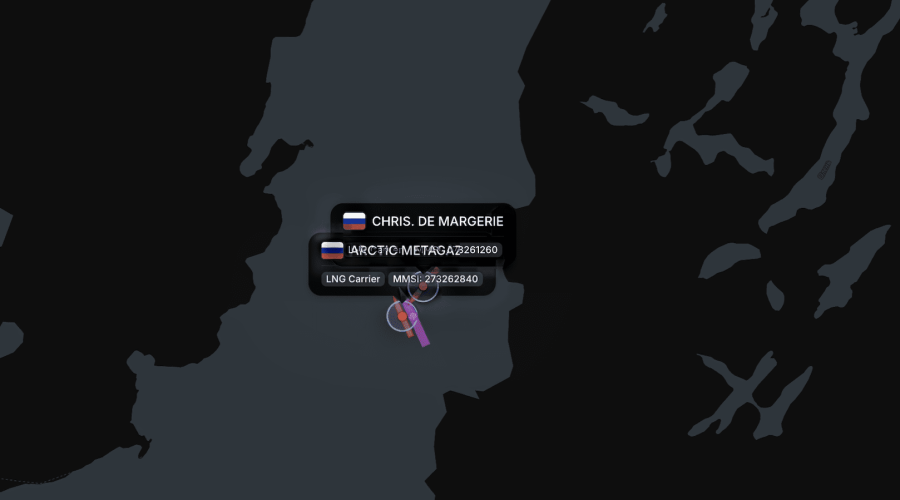
At the Saam FSU, Arc7 ice-class carrier Christophe de Margerie delivered a cargo originating from Arctic LNG 2, with the conventional tanker Arctic Metagaz loading the LNG for onward transport, likely to China’s Beihai LNG terminal, which has so far been the only confirmed destination for cargoes from the sanctioned project.
A similar double transfer had taken place at the same FSU in early January, according to shipping data and satellite tracking.
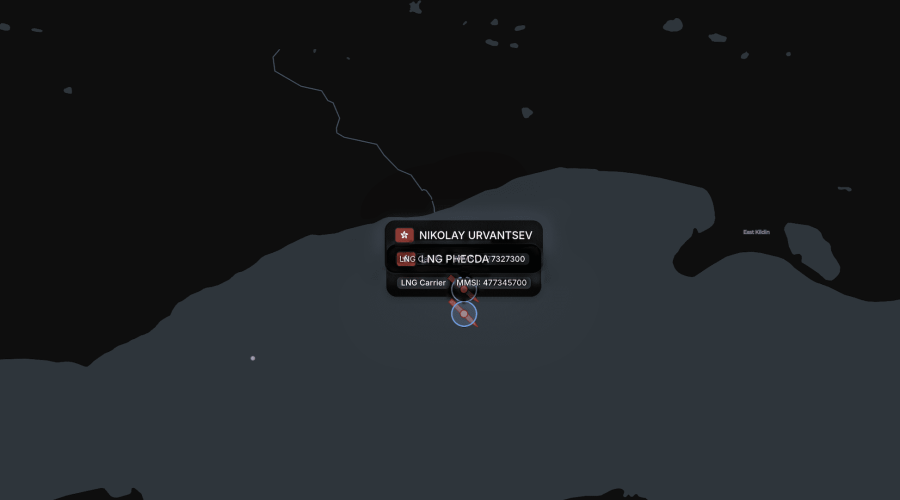
Separately, an Arc7 carrier, Nikolay Urvantsev, transporting LNG from Yamal LNG conducted an STS transfer at the Kildin anchorage east of Murmansk, with the cargo likely bound either for Europe or Asia aboard the conventional tanker LNG Phecda.
All three operations took place within the Murmansk region, a key hub for Russia’s Arctic LNG exports and a focal point for STS operations designed to bridge ice-class shipping with global tanker fleets.
Russia’s Arctic LNG projects have become a crucial source of export earnings, alongside oil. Yamal LNG, led by Novatek and partners, has shipped tens of millions of tonnes of LNG since its 2017 start-up, while Arctic LNG 2 is designed to further expand capacity. The projects tap vast gas reserves on the Yamal and Gydan peninsulas, feeding liquefaction plants that supply Europe and Asia.
Despite sanctions imposed by the United States, the European Union and others following Russia’s invasion of Ukraine, LNG exports have proven harder to curtail than pipeline gas, thanks in part to complex maritime logistics and a fleet of ice-class carriers.
Europe purchased about 93% of Yamal LNG output in January 2026, according to trade data, a record level that traders say reflects efforts by buyers to secure supply before an EU import ban on Russian LNG is due to take effect in January 2027. As a result EU imports from Yamal are up 8% year over year for 2026.


1 Comment
Numquam tenetur fuga nobis. Eos fugit dicta corrupti. Labore aut quibusdam vel nam. Et ea eos laudantium vitae. quia qui atque. pariatur veniam sed est et. est ut quia mollitia odio fugiat. dolorem iure a recusandae. Iusto possimus esse corrupti. Facere dolorem neque possimus ipsum. Adipisci voluptatem qui ipsum quae. provident id expedita eveniet enim qui temporibus. Molestiae laudantium et. Eius et nam libero aut. Laborum ex animi et. Qui voluptas soluta et labore. Eos totam sint vel omnis et quis. Iure natus qui Qui voluptatem accusamus aut ullam aliquid.