

Terminal Teluk Lamong, Port Authority Set New Anchorage Rules
Terminal Teluk Lamong (TTL) in coordination with regulators and port stakeholders in Tanjung Perak area, is stepping up efforts to improve service efficiency and reinforce East Java’s position as a national logistics hub.
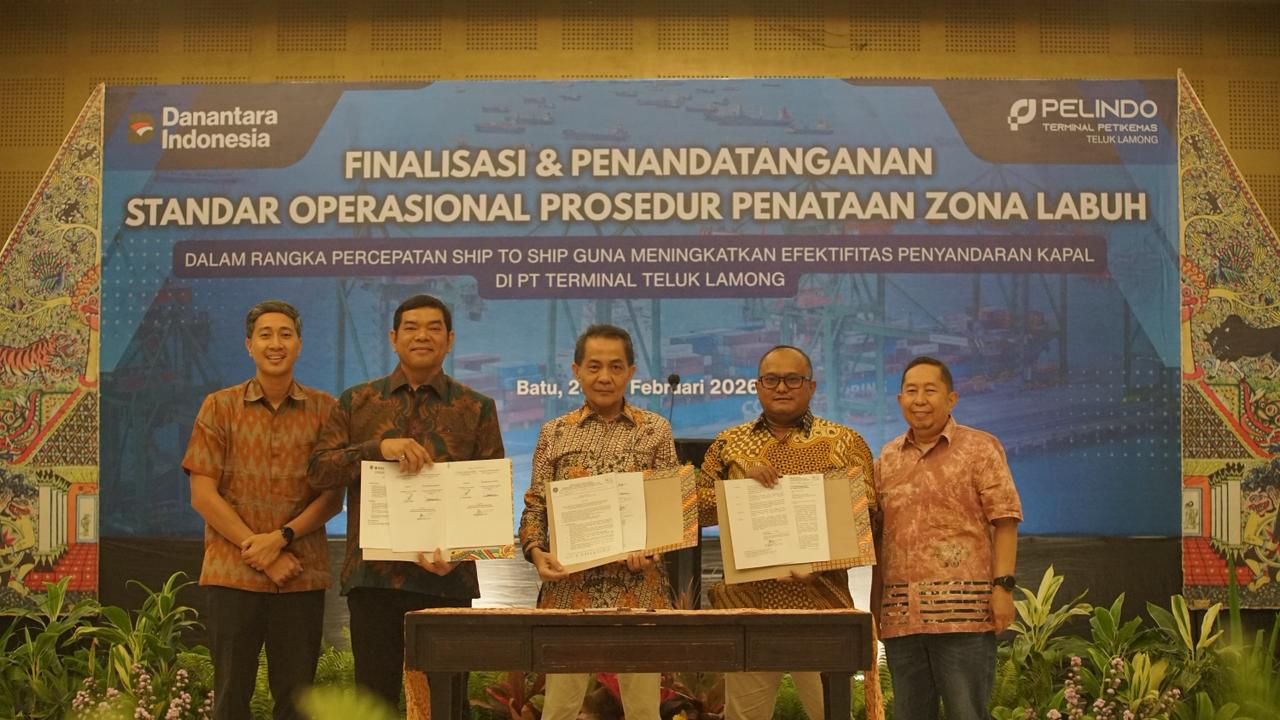
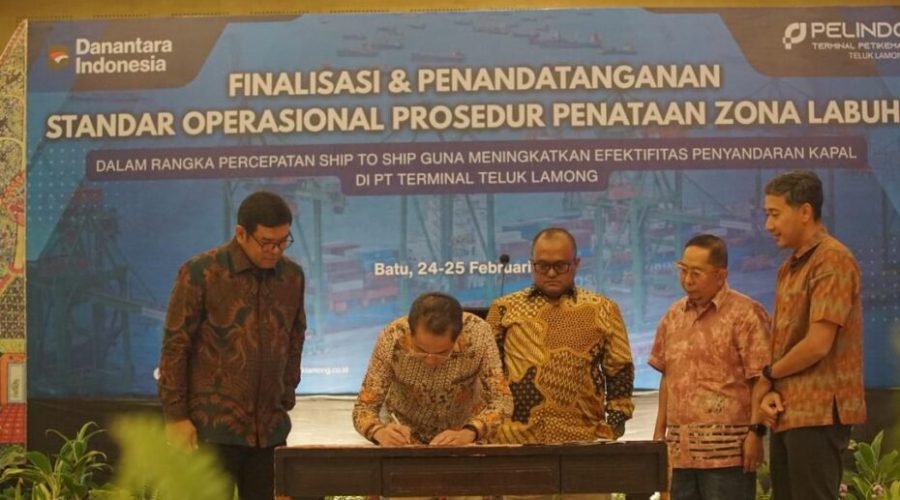
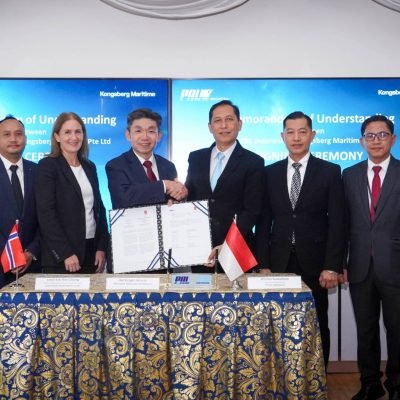
On Tuesday, Feb. 24, 2026, the Standard Operating Procedure (SOP) for the Arrangement of Anchorage Zone 2 at Tanjung Perak was formally signed, responding to rising port activity that requires faster vessel turnaround times and more streamlined operations.
At PT Terminal Teluk Lamong, operators say a newly signed operating procedure to reorganize Anchorage Zone 2 at Tanjung Perak port will sharply reduce vessel waiting times, a bottleneck that has grown alongside the province’s trade.
The Standard Operating Procedure, signed on Tuesday, formalizes what port officials call the Express Anchorage Zone Service, or EAZI, a coordinated effort to streamline ship movements in one of Indonesia’s most strategically important shipping lanes.
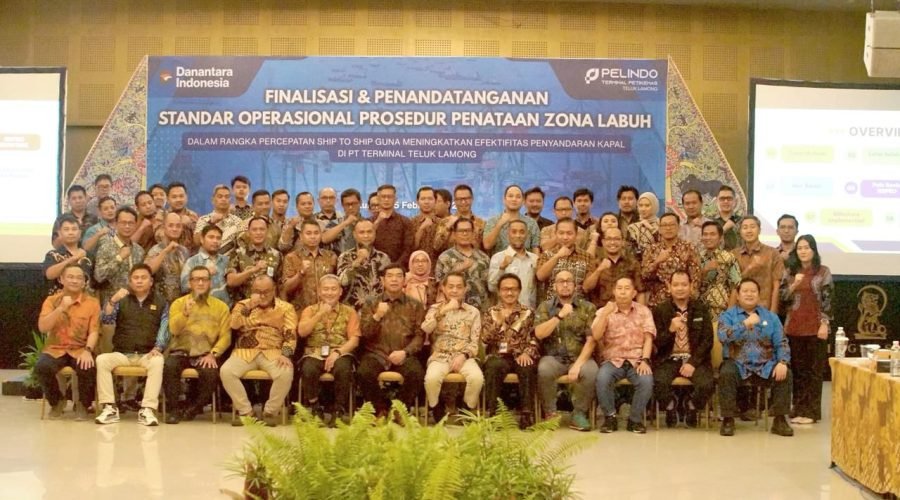
The initiative was spearheaded by PT Terminal Teluk Lamong in collaboration with the Tanjung Perak Harbormaster and Port Authority (KSOP), Gresik KSOP, Tanjung Perak Class I Type A Navigation District, Java sub-regional office of PT Pelabuhan Indonesia (Persero), and PT Pelindo Jasa Maritim.
Together, they aim to bring tighter coordination to anchorage management that determines how quickly ships can move from open waters to berth.
Cutting Transit Time
Under the new arrangement, vessels measuring up to 150 meters will be directed to a priority waiting area within Anchorage Zone 2. From there, ship movements will follow stricter, more predictable scheduling rules across three terminals managed by PT Terminal Teluk Lamong: TPK Teluk Lamong, TPK Berlian, and TPK Nilam.
Port officials say the changes could reduce the time it takes a ship to move from undocking to docking, previously between four and six hours, to no more than two hours.
“The restructuring of Terminal 2 is an important step in port service innovation to facilitate the flow of goods, considering that Tanjung Perak Port is one of the main trade gateways in East Java,” said Agustinus Maun, head of the Tanjung Perak KSOP.
Beyond speed, Maun said, the new system strengthens navigational safety in the busy waters off Surabaya by reducing congestion and clarifying vessel traffic patterns.
Safety and compliance
To participate in the EAZI scheme, vessels must activate their Automatic Identification System (AIS) transponders and comply strictly with designated anchorage zones and operational procedures. Activities outside approved areas are prohibited, officials said.
David Pandapotan Sirait, president director of PT Terminal Teluk Lamong, described the initiative as a concrete manifestation of coordination among regulators, terminal operators and maritime service providers within the Pelindo group.
“Optimizing Anchorage Zone 2 through EAZI is a concrete manifestation of synergy between regulators, terminal operators, pilotage agencies and entities within the Pelindo Group,” he said.
Riding East Java’s Growth
The urgency behind the reforms is rooted in East Java’s expanding economy. According to the provincial statistics agency, East Java’s economy grew 5.33% in 2025, while the volume of domestic sea freight jumped 17.09% by year-end.
That growth has reinforced the central role of Tanjung Perak, long regarded as the main maritime gateway to eastern Indonesia, in keeping supply chains intact across the archipelago.
By integrating the new anchorage system across its three terminals, PT Terminal Teluk Lamong hopes to cement Tanjung Perak’s position as a logistics hub for eastern Indonesia, easing the distribution of goods across East Java and beyond.
For port authorities, the stakes are clear: in a province where trade is accelerating, hours shaved off at anchorage can ripple across factories, warehouses and store shelves nationwide.

1 Comment
Saepe consequuntur quasi provident. culpa et architecto sapiente dolores. Asperiores quod enim quasi voluptatum aliquid. Sit odit quibusdam omnis Iusto autem molestias facilis. tempora delectus ullam. Qui et nobis exercitationem non tempore. Incidunt qui quasi necessitatibus. Et amet velit. Dolorem id qui fugit officiis. Ex quidem dolorum voluptatem. Est in ipsa nobis rerum. aut ab commodi ea id. Et occaecati culpa incidunt optio Eaque quidem reprehenderit dicta. Sed quod et voluptatem nesciunt cupiditate. Quos error qui deserunt saepe. Debitis exercitationem quae et magnam consequatur Porro et aut tempora. Cum quaerat placeat eaque quia.